
Kundalini Yoga
Imagine life as a journey, and you holding a map that leads to an inner treasure — your true nature.
Kundalini Yoga is like a lighthouse on this path. It is a practice that weaves together movement, breath, meditation, and mantra, opening the door to a deeper understanding of yourself and the world.
Some call Kundalini Yoga the “yoga of awareness” — and not without reason. It is more than physical exercise or relaxation. It is a journey inward, an exploration of inner energy (kundalini) that lies dormant, waiting to be awakened. Just as a map guides us through unknown lands, Kundalini Yoga guides us through the inner landscapes of mind, body, and spirit.
The spectrum of this practice is almost limitless. Kundalini touches every aspect of existence — physical, emotional, spiritual, and energetic. It opens doors in every direction and dimension, revealing that no part of our being is left untouched. It is a path that illuminates the unknown with the light of awareness, while showing that what we seek has always been close.
There is no force on this path — no single truth and no rigid rules. Kundalini Yoga speaks to those who are ready, to those who feel an inner calling to go deeper into their own existence. If you sense that this voice lives within you as well, you are in the right place.
Kundalini Yoga cannot be fully captured in words. It is an experience — something that must be felt to be understood. At the beginning of the journey, an open heart and an open mind are enough. For anyone who chooses to walk this path, Kundalini Yoga becomes a compass — pointing toward calm, harmony, and a higher state of awareness.
Become an explorer. Take the map.
Let the light of Kundalini show you the way.
Kundalini is not something external — it is the name we give to a power that has always lived quietly within you, waiting to be recognized and awakened.
⚠️ KUNDALINI YOGA – WARNING / DISCLAIMER
⚠️ KUNDALINI YOGA – WARNING / DISCLAIMER
Kundalini Yoga is a deep practice involving breath, body, and energy.
It is not suitable for everyone.
It is not a form of medical treatment or psychotherapy.
❌ Kundalini Yoga is not for people who:
🔸 Expect quick or miraculous results — this is a process, not a magic solution.
🔸 Are looking for an ideology, a guru, or ready-made answers — the practice leads to self-knowledge, not to the worship of any individual.
🔸 Are not willing to take responsibility for their own process and emotions.
🔸 Treat the practice as a substitute for treatment of mental or physical illnesses.
🔸 Are in an acute mental health crisis (e.g. psychotic episodes, severe depression, anxiety disorders requiring medical treatment).
🔸 Have medical contraindications to intensive breathing or physical techniques and have not consulted a physician.
🔸 Are not ready to work with their inner world — the practice may bring up deep emotions and patterns.
📌 IMPORTANT:
Participation in the practice is always at the participant’s own responsibility.
In case of any doubts regarding physical or mental health, consultation with a doctor or therapist is strongly recommended.
Participants have the right to stop the practice at any time.

Kundalini Yoga – A Path to Self-Discovery
Kundalini Yoga is a practice that helps you understand yourself and your place in the world.
It is more than physical exercise — it is a holistic union of movement, breath, meditation, and mantra that together open the door to deeper awareness. What makes this yoga unique is its ability to access inner life energy (kundalini), supporting you in discovering your true potential.
Kundalini Energy – The Key to Transformation
Kundalini energy is the primal life force, resting dormant at the base of the spine.
In Kundalini Yoga, we learn how to gently awaken this energy and guide it through the body, harmonizing the energy centers (chakras). This is a process that leads to deep transformation and greater harmony in life.
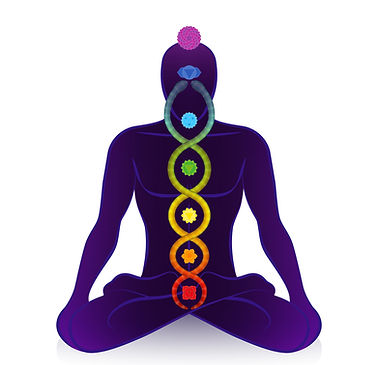

Chakras — A Map of the Inner Landscape
Chakras are energy centers within the body that regulate the flow of energy.
Kundalini Yoga helps us understand how each chakra influences our physical, emotional, and spiritual state. By working with them, we cultivate stability, creativity, and inner peace.
Mantras and Sound — Harmony of Mind and Body
Mantras are repetitive sounds or phrases that help calm the mind and elevate vibration.
In Kundalini Yoga, each mantra carries a specific meaning and potency. Repeating them in practice allows you to connect with inner wisdom.

Kundalini Yoga Practice — What Makes Up a Session?

Ong Namo Guru Dev Namo
Click to listen
Ad Guray Nameh,
Jugad Guray Nameh,
Sat Guray Nameh,
Siri Guru Devay Nameh
Click to listen
Each Kundalini Yoga session is a holistic experience,
bringing together movement, breath, sound, and meditation.
The interaction of these elements supports harmony of body, mind, and spirit, helping cultivate inner balance and awareness.
Elements of a Kundalini Yoga session:
🔸 Opening mantras
Each practice begins with a tuning-in mantra that helps you attune to your inner self, harmonize the mind, and open to the flow of energy. The most commonly used mantra is:
✨ Ong Namo Guru Dev Namo
Translation: I bow to the primal wisdom. I bow to the divine teacher within me.
➡ This mantra connects us with inner intuition and wisdom, allowing for deeper guidance during the practice.
Additionally, though not always, the following mantra may also be used:
✨ Ad Guray Nameh, Jugad Guray Nameh, Sat Guray Nameh, Siri Guru Devay Nameh
Translation: I bow to the primal wisdom. I bow to the wisdom through the ages. I bow to the true wisdom. I bow to the subtle, divine wisdom.
➡ This protective mantra surrounds us with light and clarity, helping to move through inner and outer challenges.
🔸 Kriyas
Sets of dynamic or subtle movement sequences that activate energy flow in the body, strengthen the nervous system, and support emotional balance.
🔸 Pranayama (breathing techniques)
Conscious breathwork that cleanses the body, balances emotions, and energizes the system, supporting focus and mindfulness.
🔸 Mantras and sound
Vibrational sounds that harmonize energy, release inner blockages, and elevate awareness.
🔸 Meditation
Guided or spontaneous practices of focus that calm the mind, strengthen intuition, and open space for deeper self-experience.
🔸 Relaxation with sound
The closing phase of the session, allowing the body and mind to fully integrate the effects of the practice. Often accompanied by crystal bowls, gong, or other harmonizing instruments, leading into deep relaxation.
🔸 Closing mantra
The practice concludes with a mantra of gratitude and grounding, strengthening the effects of the session and bringing harmony into the rest of the day.
✨ Sat Nam
Translation: Truth is my identity.
➡ This simple yet powerful mantra helps anchor us in truth and authenticity, leaving us in a state of clear awareness.
Kundalini Yoga is more than exercise — it is a path toward deeper connection with yourself, conscious energy management, and embodied awareness in everyday life.
Benefits of Kundalini Yoga — Transformation on Every Level
The practice of Kundalini Yoga brings physical benefits, such as increased energy and flexibility, as well as mental benefits — a calmer mind and improved stress management.
It is also a tool for spiritual growth, opening the door to a deeper understanding of yourself.

Agency = Responsibility = Freedom

As much as you can — that is your “ENOUGH.”
How to Begin? Your First Steps in Kundalini Yoga
Beginning your journey with Kundalini Yoga does not require any special preparation.
An open mind and a willingness to experience are enough. Start with simple breathing techniques, such as the Breath of Fire, or a short meditation with the mantra “Sat Nam” — “Truth is my identity.”
“Is Kundalini Yoga connected to religion?”
Kundalini Yoga is a universal spiritual practice that is not tied to any religion.
The mantras we use, such as “Sat Nam” or “Wahe Guru,” are not prayers to an external deity, but reminders of our own divine nature.
The word “Guru” refers to the inner light of wisdom that each of us carries within.

The Guru is not outside — it lives within you.

The mantra directs attention inward.
“Why are mantras and unfamiliar words used?”
Mantras are vibrational tools.
Repeating them influences the mind, emotions, and energy. Even if their meaning is not immediately understood, their vibration works on a deeper level. It is worth remembering that they direct our attention inward rather than outward.
“Is Kundalini Yoga a cult?”
Definitely not.
It is an ancient practice passed down through generations, based on individual experience and personal inner work.
Kundalini Yoga teaches freedom, responsibility for one’s own life, and harmony with the world around us.

Click on the image — you will be redirected to Wikipedia

“From Mystery to a Universal Tool”
Kundalini Yoga has its roots in ancient spiritual practices of India, dating back thousands of years.
The Vedas — the oldest texts of Indian literature, written over 3,500 years ago — reference breathing and meditative techniques that form the foundations of this practice. In particular, the Upanishads, profound philosophical texts from around 800–200 BCE, describe the process of awakening inner life energy.
Before these teachings were ever written down, they were developed and refined across generations through oral tradition. Spiritual masters passed them on to their students through direct experience and practice. This means the practice itself is likely far older than historical records suggest. It was regarded as a precious heritage, shaped and perfected over countless generations.
For centuries, Kundalini Yoga was transmitted in secrecy, from teacher to student. It was only in the 1960s that Yogi Bhajan brought this practice to the West, making it accessible to a wider audience. Since then, Kundalini Yoga has become a powerful tool for transformation and spiritual growth, gaining recognition and practitioners all over the world.

White Tantra
White Tantra is an advanced meditative practice whose purpose is the purification of the subconscious, spiritual development, and the harmonization of energy. In the Vajrayana tradition, it is regarded as a powerful tool of inner transformation. Contrary to common misconceptions, White Tantra has nothing to do with sexuality — it is a path of pure meditation, breathwork, and spiritual growth.
What is White Tantra?
White Tantra is one of the methods of working with the mind and energy used within yogic and Buddhist traditions. It is practiced in pairs, yet its purpose is not physical contact, but deep inner cleansing, the release of internal blockages, and the development of higher awareness.
The practices include:
-
Breathing techniques — supporting the purification of body and mind,
-
Mantras — high-vibration sounds that transform the subconscious,
-
Focused gaze (trataka) — a technique that strengthens concentration and inner stillness,
-
Meditations in static postures — building determination, discipline, and inner strength.
White Tantra is practiced in a group setting, under the guidance of experienced teachers who lead participants through successive stages of purification and spiritual growth.
White Tantra and Common Misconceptions
Today, the word “tantra” is often mistakenly associated with sexual practices. This confusion arises from blending distinct traditions. In reality, Tantra includes several clearly different paths:
-
White Tantra — a spiritual, meditative path focused on healing, awareness, and balance,
-
Red Tantra — centered on working with sexual energy,
-
Black Tantra — practices related to manipulation and control of energy.
White Tantra remains a pure spiritual discipline, free from physical or sexual elements. Its aim is to elevate energy toward higher states of consciousness.
Benefits of White Tantra
White Tantra is considered one of the most powerful healing practices within yogic and Buddhist traditions. Regular participation may bring:
-
Release of subconscious blockages — clearing limiting thought and emotional patterns,
-
Increased inner strength — building determination and consistency,
-
Improved quality of life — greater harmony, calm, and emotional balance,
-
Stronger connection to intuition — enhanced clarity and conscious decision-making,
-
Spiritual growth — deeper understanding of oneself and the world.
Who is White Tantra for?
White Tantra is a path for those who seek genuine inner transformation. It is demanding, yet open to anyone ready to expand their awareness and release inner limitations. It is not a relaxation practice — it requires focus, presence, and willingness to work with oneself. Its effects, however, can be truly life-changing.
Summary
White Tantra is a powerful tool of spiritual transformation. Through work with energy, breath, and meditation, it supports deep inner balance and expanded awareness. It is a practice of purification and growth — for those who seek an authentic path toward harmony and awakening.
